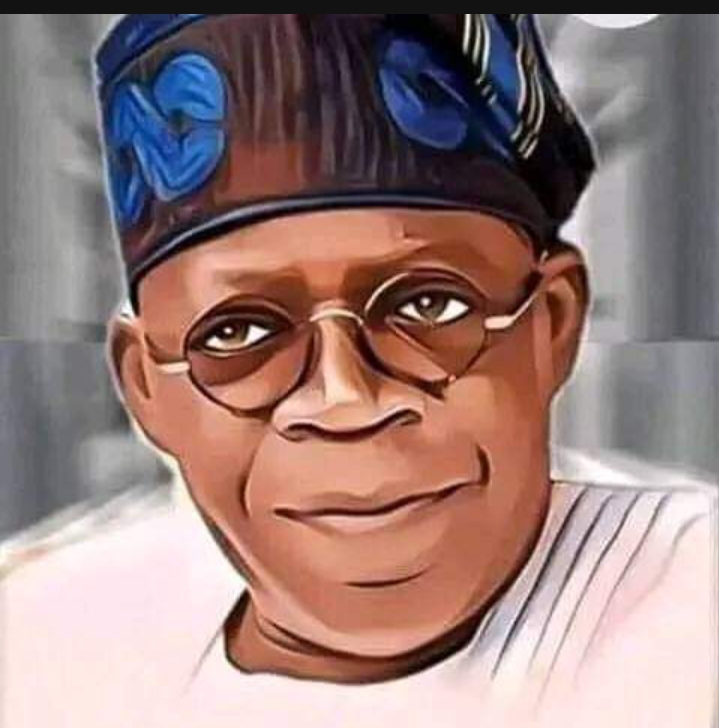
ASIWAJU BOLA AHMED ADEKUNLE TINUBU (born 29 March 1952) in Lagos, British Nigeria (now Lagos State, Nigeria)
He is a Nigerian Accountant and Politician who served as the Governor of Lagos State from 1999 to 2007 and Senator for Lagos West during the brief Third Republic.
In June 2022, he was chosen as the All Progressives Congress nominee in the 2023 Nigerian presidential election.
Tinubu spent his early life in SouthWestern Nigeria and later moved to United States where he studied Accounting at Chicago State University. He returned to Nigeria in the early 1980s and was employed by Mobil Nigeria as an accountant, before entering Politics as a Lagos West senatorial candidate in 1992 under the banner of the Social Democratic Party. After dictator Sani Abacha dissolved the Senate in 1993, Tinubu became an activist campaigning for the return of democracy as a part of the National Democratic Coalition Movement. Although he was forced into Exile in 1994, Tinubu returned after Abacha’s 1998 death triggered the beginning of the transition to the Fourth Republic.
In the first post-transition Lagos State gubernatorial election, Tinubu won by a wide margin as a member of the Alliance for Democracy over the Peoples Democratic Party’s Dapo Sarumi and the All People’s Party’s Nosirudeen Kekere-Ekun. Four years later, he won re-election to a second term over the PDP’s Funsho Williams by a reduced margin. Tinubu’s two terms were marked by attempts at modernizing the City of Lagos and his feuds with the PDP-controlled federal government. After leaving office in 2007, he since played a key role in the formation of the All Progressives Congress in 2013 Long and controversial, Tinubu’s career has been plagued by accusations of corruption and questions about the veracity of his personal history.
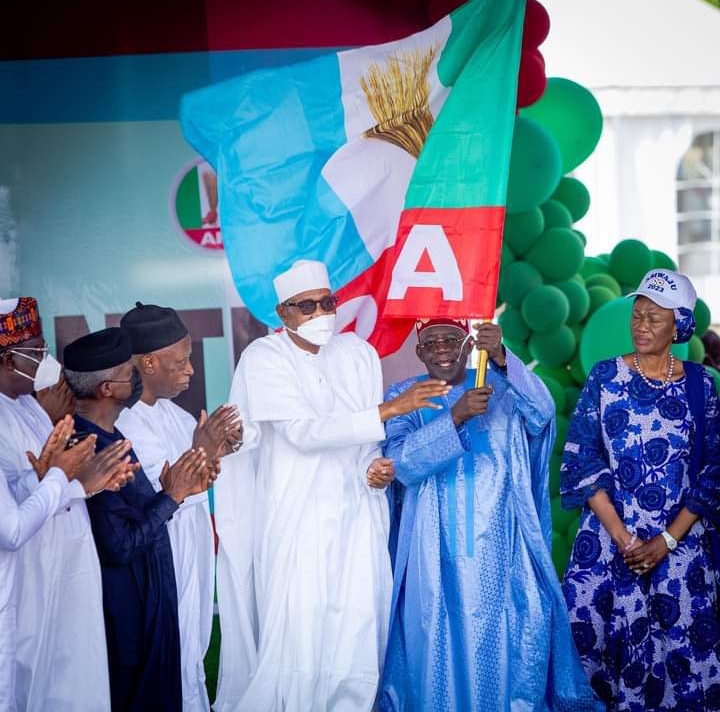
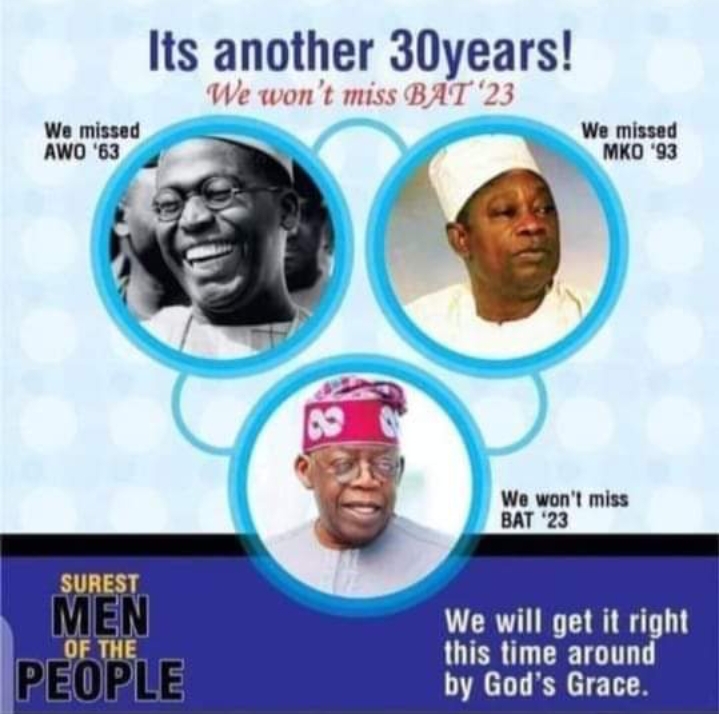
GOVERNOR LAGOS STATE 1999 – 2007
When he assumed office in May 1999, Tinubu promised 10,000 housing units for the poor with little achieved. During the eight-year period of his being in office, he made large investments in education in the state and also reduced the number of schools in the state by returning many schools to the already settled former owners. He also initiated new road construction, required to meet the needs of the fast-growing population of the state.
Tinubu, alongside a new deputy governor, Femi Pedro, won re-election into office as governor in April 2003. All other states in the South West fell to the People’s Democratic Party in those elections. He was involved in a struggle with the Olusegun Obasanjo-controlled federal government over whether Lagos State had the right to create new Local Council Development Areas (LCDAs) to meet the needs of its large population. The controversy led to the federal government seizing funds meant for local councils in the state. During the latter part of his term in office, he was engaged in continuous clashes with PDP powers such as Adeseye Ogunlewe, a former Lagos State senator who had become minister of works, and Bode George, the southwest chairman of the PDP.
Relations between Tinubu and deputy governor Femi Pedro became increasingly tense after Pedro declared his intention to run for the gubernatorial elections. Pedro competed to become the AC candidate for governor in the 2007 elections, but withdrew his name on the eve of the party nomination. He defected to the Labour Party while still keeping his position as deputy governor. Tinubu’s tenure as Lagos State Governor ended on 29 May 2007, when his successor Babatunde Fashola of the Action Congress took office.
OUR SINCERE APPRECIATION
We Sincerely show our Gratitude towards your Contribution and Support for our Apex Leader (ASIWAJU BOLA AHMED ADEKUNLE TINUBU) and the
Opportunity given to us to Work and Mobilize together with Team Spirit.
While we Promise to Discharge our Responsibility to the Best of our Abilities to make Vision 2023 a Reality
and Successful one.
 ASIWAJU PROGRESSIVE GROUP